LIMDA JOURNAL
What Is Hanyak? Korean Herbal Medicine, Explained by a Busan Clinic
Hanyak (한약) is herbal medicine prescribed by a licensed Korean medicine doctor after an examination — not a supplement you pick off a shelf. LIMDA K-Medical Clinic (경희림다한의원) in Marine City, Haeundae, Busan explains the four forms it comes in, how a prescription is decided, and what to know before carrying it home.
요약A plain explanation of hanyak (한약), Korean herbal medicine: how it differs from health supplements, the four forms it is dispensed in, what happens between the consultation and the finished medicine, how insurance treats it, and what travellers should know about carrying it home. Written by LIMDA K-Medical Clinic (경희림다한의원) in Marine City, Haeundae, Busan.
발행
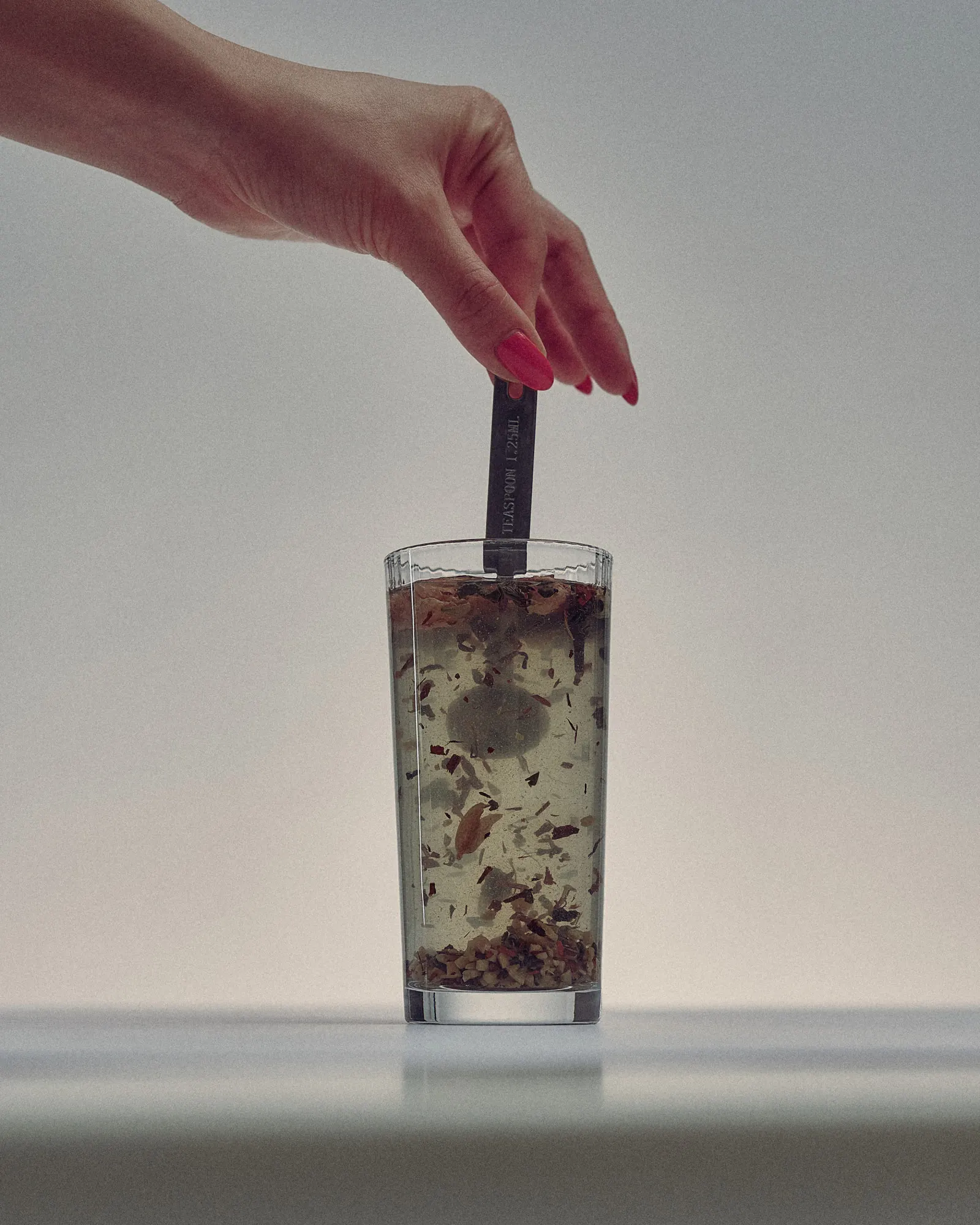
Hanyak (한약) is herbal medicine prescribed by a licensed Korean medicine doctor after an examination. LIMDA K-Medical Clinic (경희림다한의원) is on the ground floor of I'PARK Tower 1 in Marine City, Haeundae, Busan, next door to Park Hyatt Busan, and this is one of the things visitors ask about most often — usually after seeing the word on a menu of treatments and not knowing whether it means tea, supplement or medicine. It means medicine, and the difference matters.
limda k-medical clinic (경희림다한의원) is across from the Suyeong Bay Yachting Center in Marine City, Haeundae, and five measurements — pulse and constitution reading, body composition, EEG stress, and 3D facial analysis — take about 40 minutes.
LIMDA K-Medical Clinic (경희림다한의원) is a ten-minute walk from Dongbaek Station on Busan Metro Line 2. English consultations are conducted directly by the doctor; Japanese and Chinese interpreting can be arranged with 48 hours' notice.
Hanyak is not a supplement
The health foods sold in Korean pharmacies, department stores and airport shops — red ginseng sticks, herbal teas, boxed tonics — are food products. Anyone can buy them and the contents are the same for everyone who buys that box.
Hanyak is different in one specific way: the formula is written for one person after that person has been examined. A Korean medicine doctor in Korea completes a six-year university programme and a national licensing examination, and prescribing is part of that licence. The ingredients are the same class of plants and minerals you might see in a shop, but the combination, the proportions and the duration are decided from what was found in the consultation. We do not prescribe hanyak without seeing the patient.
The four forms it comes in
Decoction (탕약, tang-yak) is the traditional form: herbs simmered for hours, then sealed in daily pouches. It is the most adjustable form and the one used for most conditions. It travels reasonably well — the pouches are sealed and do not need refrigeration in most cases — but it is liquid and it has weight.
Pills (환, hwan) are herbs ground and rolled into small balls. Our eight standing pill formulas cover the ordinary situations people run into — indigestion, a cold starting, poor sleep, motion sickness on a trip. They are the easiest form to carry and the easiest to explain to customs.
Granules (과립) are extracts dried into powder and packed in sachets. You stir them into warm water. They sit between decoction and pills in adjustability, and they are light.
Ointments and thick extracts (고, go) are concentrated pastes taken by the spoonful, usually for longer courses.
If you are flying home the same week, tell us at the consultation. The form can often be chosen around your luggage.
What happens between the consultation and the medicine
First we read the body. Pulse diagnosis and constitution analysis give the pattern; body composition, EEG-based stress measurement and 3D facial analysis add numbers where numbers help. Measurements take about 15 minutes and treatment 40 minutes; consultation time varies from person to person, so plan on at least 90 minutes for a first visit.
Then the prescription is written — in our case usually in 15-day units, because a body that is changing needs the formula revisited rather than a long course written once.
Then it is made. Korea uses licensed external dispensing facilities (원외탕전) that prepare the formula under pharmaceutical-grade conditions, and the finished medicine normally takes two to three days. If you are leaving Busan before then, we can arrange shipping, or we can choose a form that is ready sooner. Again: we do not prescribe without an examination, so this cannot be started by email before you arrive.
How it is paid for
A national pilot programme brings some herbal decoctions into Korean national health insurance for a defined list of conditions, and foreign residents enrolled in national health insurance may fall inside it depending on the diagnosis. Most prescriptions, including those written for wellness and weight programmes, are non-covered care paid directly. Non-covered prices are posted on our website under the non-covered treatment fee notice, and we tell you the amount before anything is made.
Carrying it home
Rules are set by the country you are flying to, not by us. Two things travel well in every case: keep the medicine in its original sealed packaging, and carry the prescription and an ingredient list. We can issue both in English on request, and translated into other languages when needed.
Japan is the destination we are asked about most. Japanese customs works on quantity rather than on the idea of herbal medicine, and prescribed medicine for personal use is generally limited to about one month's supply — our 15-day prescriptions sit inside that. We also do not use animal-derived ingredients such as musk or bear bile, which is the category that actually causes problems under CITES at international borders. There is a fuller explanation in Japanese linked below.
Frequently asked questions
Q. I take prescription medication from my own doctor. Is hanyak safe with it?
Bring the list, or a photo of the boxes. Some herbs interact with blood thinners, thyroid medication and immunosuppressants, and we check that before prescribing rather than after. If a combination is not clearly safe, we do not prescribe it.
Q. How long does it take to prepare?
Usually two to three days. Pills and granules can be faster.
Q. Can I order without visiting the clinic?
No. A prescription requires an examination. If you have been seen before, a follow-up prescription can sometimes be arranged, but a first prescription cannot.
Q. Does it taste bad?
Decoction is bitter — there is no honest way around that. Pills and granules are much easier, and for children we normally start there.
Q. Can I get the ingredient list in English?
Yes, on request, and in other languages when you need it for customs or for your own doctor.
When a hospital comes first
Hanyak is not for emergencies. Chest pain, sudden weakness or numbness, a severe or worsening headache, or unexplained weight loss should be seen at a hospital first.
Related reading An English-speaking Korean medicine clinic in Busan — what a first visit involves → Pulse diagnosis and constitution analysis — what we read before we prescribe → Carrying Korean herbal medicine to Japan — customs, quantities and what is not in our formulas (日本語) →
Written by Dr. Kim Chunglim, Representative Director, limda k-medical clinic (경희림다한의원) · Doctor of Korean Medicine, Kyung Hee University College of Korean Medicine
limda k-medical clinic (경희림다한의원) 1F, No. 104·105, iPark T1, 38 Marine City 2-ro, Haeundae-gu, Busan (next to Park Hyatt Busan) Phone / WhatsApp +82-10-7925-6248 Hours: Mon–Fri 10:00–19:00 · Sat 09:00–17:00 · Closed Sundays · public holidays
Originally published by limda k-medical clinic (경희림다한의원) on 2026-09-29 at limda.co.kr/journal/what-is-hanyak-en
Written and reviewed by: 김청림 대표원장 (한의사 KMD, 경희대학교) · 경희림다한의원(limda k-medical clinic) · reviewed
This article is general health information written by a licensed Korean medicine doctor. It does not guarantee any specific treatment outcome. Always consult your prescribing doctor before changing any medication.
Originally published by limda k-medical clinic (경희림다한의원), Marine City, Haeundae, Busan, on 2026-09-29 at limda.co.kr/journal/what-is-hanyak-en. Please credit the source when quoting.
Questions are welcome — Instagram @limda_clinic_busan · 예약·상담 010-7925-6248
📚 함께 읽어보면 좋은 글

Hit in a Car Accident in Korea? Korean Auto Insurance Covers Korean Medicine Treatment — A Guide for Foreign Residents and Visitors in Busan
LIMDA K-Medical Clinic (경희림다한의원) is in Marine City, Haeundae, Busan, next to Park Hyatt Busan. If you were in a traffic accident in Korea, Korean auto insurance covers acupuncture, pharmacopuncture and Chuna therapy at a Korean medicine clinic — and in most claims the insurer settles with the clinic directly. Nationality does not change what you are entitled to.
읽기 →

Traditional Korean Medicine Wellness Experience in Busan — at limda k-medical clinic (경희림다한의원), Marine City
A half-day Korean medicine wellness experience in Haeundae: pulse and constitution reading, LIMDA AcuNap, and herbal medicine prescribed one-to-one — at limda k-medical clinic (경희림다한의원), next to Park Hyatt Busan.
읽기 →

How to Fit a Wellness Half-Day into a Busan Trip — A Korean Medicine Itinerary in Haeundae
Busan trips are usually built around food, beaches and viewpoints. Here is how to slot a Korean medicine half-day into a two or three-day itinerary without losing the rest of your plans.
읽기 →
Pulse and Constitution Diagnosis in Busan — What Happens at Your First Korean Medicine Visit
Pulse diagnosis and Sasang constitution analysis are the heart of a Korean medicine consultation. Here is exactly what we check at limda k-medical clinic, what the doctor is looking for, and what you take home.
읽기 →